
Indonesia is officially targeting Country of Honor status at Cannes in 2028.
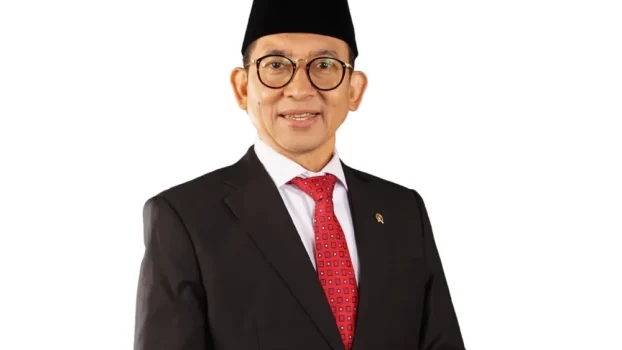
Culture Minister Fadli Zon, speaking to Variety at Cannes, laid out a sweeping strategy to move Indonesia from the margins of the international screen industry toward what he describes as a central and influential role within it.
“That is not only about prestige, but about creating a larger international platform for Indonesian cinema, culture, and creative talent,” Zon says of the 2028 ambition.
The push comes at a moment when Indonesia’s film industry is generating outstanding local box office but hasn’t yet converted that momentum into consistent international breakthrough. Zon frames the ministry’s response around expanding global distribution and export capacity, broadening festival access for regional filmmakers, and building more competitive incentive structures — areas he identifies as active policy priorities.
On tax incentives and production rebates, an area where competitors including South Korea and Thailand have moved aggressively, Zon acknowledges Indonesia is still developing its architecture. “Yes, we recognize that incentives and rebates are increasingly important in the global film industry, particularly as countries compete to attract international productions, investment, and creative partnerships,” he says, adding that the ministry is studying international models while ensuring any scheme delivers measurable impact for local talent development and economic value creation. In the interim, the government has established matching fund schemes and collaborative financing models designed to strengthen partnerships between Indonesian filmmakers and global industry players. In parallel, the ministry draws on Dana IndonesiaRaya, the country’s cultural endowment fund, which supports talent development, production assistance, international mobility, and festival participation.
Indonesia’s 2026 Cannes presence is anchored by Next Step Studio Indonesia, a talent incubation and co-production initiative for young filmmakers backed by the Ministry of Culture, the Jakarta Provincial Government, the Embassy of France in Indonesia, and Institut Français Indonesia. The program reflects bilateral cultural commitments outlined in the Borobudur Declaration between Indonesia and France. Indonesia’s broader Cannes push is also building on momentum from a meeting between President Prabowo Subianto and President Emmanuel Macron last year, at which both leaders reaffirmed their commitment to expanded cultural collaboration. Alongside Next Step Studio Indonesia, an Indonesia-France Film Lab and institutional partnerships with La Fémis and the CNC form the core of the country’s European co-production strategy, with the Netherlands also identified as a key partner in talent exchange and film education.
Indonesian filmmakers and producers are participating across multiple Cannes industry platforms this year – Cannes Docs, the Producer’s Network, SFC Rendezvous Industry, and the SamaSama Lab matchmaking program – as well as expanding engagement with Critics’ Week and the Annecy Animation Film Festival. Indonesian Cinema Night, held on May 14, was designed to connect producers, directors, and institutions directly with international investors, festival programmers, and industry partners.
The ministry’s local strategy is equally broad. The National Talent Management Program for Film, known as MTN, is designed to create structured career pathways for filmmakers from regional areas – an explicit effort to ensure that Indonesia’s screen industry does not consolidate around Jakarta. Zon is emphatic that geographic inclusivity is not just a cultural principle but a competitive one. Indonesia is a country of 1,340 ethnic groups, more than 17,000 islands, and 718 local languages – representing roughly 10% of the world’s linguistic heritage – and Zon argues that the richness of that regional storytelling is precisely what differentiates Indonesian cinema internationally.
“The more authentic a story is, the more universal its emotional resonance can become,” he says. On the question of whether local cultural specificity conflicts with global marketability, he dismisses the framing entirely. The two goals, he argues, reinforce one another.
Zon sees the current generation of Indonesian filmmakers as evidence of that. He points to a cohort increasingly willing to engage with social, political, environmental, and historical material – identity, inequality, urbanization, gender – with honesty and nuance. “What we are seeing now is the emergence of a generation of filmmakers who are technically skilled, globally connected, and culturally grounded at the same time,” he says. “That combination gives Indonesian cinema a stronger voice both domestically and internationally.”
On streaming, Zon rejects the framing of platforms as a threat to theatrical culture, instead describing them as complementary. Streaming has expanded access to Indonesian stories and connected local content with younger and international audiences, he says, while cinema halls remain culturally distinct – collective spaces that preserve the communal dimension of film as an art form. The ministry’s priority, he adds, is building a balanced ecosystem where both can grow in parallel.
The rapid rise of microdramas, short-form storytelling, and creator economies is on Zon’s radar, particularly given Indonesia’s position as one of Asia’s most dynamic digital markets. He sees the format as a genuine entry point for emerging talent. On artificial intelligence, his position is careful. “AI is both an opportunity and a challenge, and our responsibility is to ensure that technology strengthens – rather than weakens – the creative ecosystem,” he says. Efficiency gains in editing, subtitling, visual development, and production logistics are welcome, he argues, but technology must support rather than displace the human creative labor that defines cinema’s cultural value. The ministry, he says, is developing policy frameworks to protect creative workers and intellectual property alongside innovation.
Looking five years out, Zon’s benchmark for success is specific: Indonesian films and series appearing consistently at major international festivals, wider global distribution, and Indonesia functioning as an attractive production hub for international collaborations – not only because of its landscapes and market scale, but because of the strength of its creative talent and cultural depth. He is equally insistent that growth must remain inclusive, reaching regional creators and independent voices alongside larger commercial productions.
“If we can build that ecosystem consistently,” he says, “Indonesia will not simply participate in the global screen industry; it will become an important and influential contributor to it.”







Add comment