
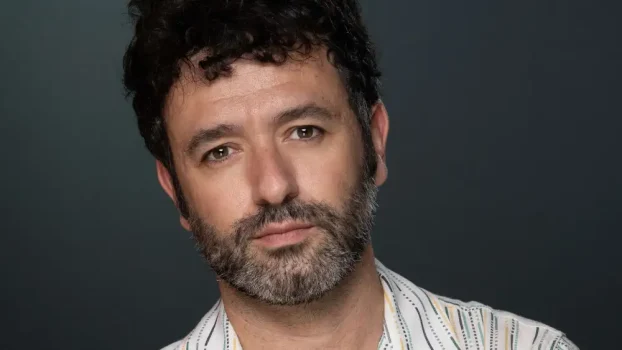
Rodrigo Sorogoyen’s “The Beloved” (“El ser querido”), which world premieres in Cannes competition on May 16, begins in a plush Madrid restaurant. The scene lasts 20 minutes.
In it, a world-famous film director, Esteban Martínez (Javier Bardem) reencounters his estranged daughter (Victoria Luengo) to offer her a part in his next film, even though he hasn’t seen her for 13 years.
To ground the scene, Sorogoyen shot it on the first day of the shoot. He also asked Bardem and Luengo not to meet nor talk, let alone rehearse, before shooting.
“In addition to the 10 pages of script they had to perform, they had to talk (or remain silent) for the hour and a half that the encounter would last,” Sorogoyen has said.
“The result is 20 minutes of scenes that, in my opinion, are pure gold. The silences, the doubts, the looks are the most real I have ever filmed,” he adds.
“The main word I repeated to myself while directing ‘The Beloved,’ was unequivocally ‘experiment,’” Sorogoyen explains. To illustrate this, talking at his Madrid production house Caballo in Madrid a few days before the Cannes, he gets up from his seat and begins sketching on a white board.
The film’s prologue was shot in digital, he explains. When Emilia finally accepts Esteban’s offer, the film within the film moves into production on the arid Canary Island of Fuerteventura which stands in for 1932 Western Sahara.
As on-set conflict between Emilia and Esteban escalates, Sorogoyen begins to mix digital film, 35 mm, 16 mm and 8 mm, widescreen and box formats, color and black and white. That climaxes in a kaleidoscope of styles where Esteban, directing one scene, erupts in fury, reverting to a verbal and physical violence which Emilia obviously knew and suffered as child, Sorogoyen explains.
“If this had been my first film, I wouldn’t have taken so many risks,” Sorogoyen reflects. As things stand, however, this could now happen because of the full trust of producers Movistar Plus+ and France’s Le Pacte and the budget they gave him, the director recognises.
Experimenting, Sorogoyen enjoyed the full-on collaboration of Javier Bardem. “He’s very intelligent and with his feet on the ground, the least star of stars that can exist. And he wanted to try things on. If I made seven takes of the same shot, he’d deliver seven different performances,” Sorogoyen enthuses.
The trust Movistar Plus+ and Le Pacte had in Sorogoyen has been hard won. From 2025-26, apart from France, no country in the world, not even the U.S., has more movies in Cannes competition from its country’s directors than Spain. And no Spanish director has broken out onto the international stage – and most especially in France – than Sorogoyen, who won its 2023 Cesar Award for best foreign film with “The Beasts,” beating out four titles which had won competition prizes at Cannes.
Over a 13 year career, Sorogoyen and career-long writing partner Isabel Peña have been worried about men: Their conflict negotiation (“The Beasts”), soaring ambitions (“The Realm”), atavistic violence (“God Save Us”) and fuck them and leave them romance (2014 debut “Stockholm”).
“It is hugely important that Esteban Martínez is a father and film director. We had that clear from the beginning,” Sorogoyen says.
Yet to call “The Beloved” a movie about toxic patriarchy is in a way to miss the point, Sorogoyen argues.
Sorogoyen and Peña don’t set out to make films about subjects. They discover what films are about as they write or even on set and editing, he explains. And “The Beloved” was the freest written and directed, encouraging actors to innovate, of any of his films, Sorogoyen adds.
The full-on arsenal of cinematographic effects which he employs are there for a reason, moreover.
Different styles reflect different viewpoints, characters’ emotions, or in the case of black and white, Esteban and Emilia’s moments of introspection as they remember the past.
“As a director and actor, Esteban and Emilia are story tellers,” says Sorogoyen. When it came to focus, “The Beloved” is “about storytelling, and how we tell stories to relate to ourselves, as a society and individuals.”
“So I asked myself: How am I going to shot a film about story telling. The most logical is to shoot it in all the different ways possible,” says Sorogoyen.
Esteban and Emilia argue right at the beginning in the restaurant, Sorogoyen notes, about what really happened when they went to watch 2004’s “Kill Bill 2.” According to Emilia, Esteban turned up drunk and high and started rowing vociferously with other spectators.
“The film is a search for them to establish now a common story about their current relationship and the pain Esteban has caused in the past,” Sorogoyen teases.

Victoria Luengo and Javier Bardem in ‘The Beloved’
Victoria Luengo and Javier Bardem in Rodrigo Sorogoyen’s ‘The Beloved’ Courtesy of Movistar Plus+







Add comment