
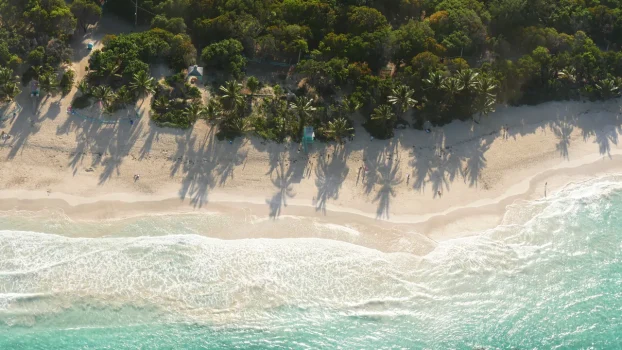
Flamenco Beach, located on Culebra, a lush island off the east coast of Puerto Rico, has just been named one of the top 50 beaches in the world. The Caribbean gem landed the 41st spot globally and 10th in North America on The World’s 50 Best Beaches list for 2026.
The lesser-known beach in Puerto Rico joined Siesta Beach in Florida (which also ranked in the 2025 list) as one of two locations in the US to make the global list—outshining legendary coastlines in California and Hawaii. The annual rankings are based on polling from over 1,000 travel professionals across the globe who visit the destinations year-round.
According to the 2026 ranking, which was released on Tuesday, April 28, Puerto Rico’s Flamenco Beach stands out for its ideal blend of a “soundtrack of nature,” its reputation as being “not too crowded,” and because the water is “easy to enter, with calm waters and a sandy bottom.”
The white-sand beach is just over one-mile long, sitting inside a broad, horseshoe-shaped bay. The curve of the land shields the coastline from a heavier swell from the Atlantic, so the water remains calm and clear for long stretches. The sea shifts in layers of color: pale green near the shore, then deeper blue as the floor drops away. A quintessential tropical beach—the sand is as fine as flour, remarkably pale and cool. (This is thanks to its composition of highly reflective white quartz and crushed coral, which simply refuses to absorb the blazing Caribbean sun.) While the beach itself is relatively short, the shore is wide enough that you can always find a spacious spot to claim as your own, even on busy peak weekends.

But it’s Culebra’s fascinating history that sets the paradisiacal beach apart from other Caribbean coves—as evidenced by the graffiti-covered tanks scattered along its shoreline. Also known as “Isla Chiquita,” or “little island,” Culebra was used by the US Navy for training exercises and bombing practice in the 1970s, which led to environmental damage and local protests. Activists ultimately succeeded in pressuring the US military to end operations on the island; today, leftover remnants from this era—including the rusted tanks on Flamenco Beach—are now notable tourist attractions.
Following the US military’s departure, parts of the island were transferred into conservation status. Much of Culebra is now protected under the Culebra National Wildlife Refuge, which preserves mangroves, dry forest, and charming coastal habitats used by seabirds and marine life. That framework has kept large-scale construction off most of the coastline, especially in and around Flamenco Beach. Snorkeling is popular at the ends of the beach, where visitors can swim among fish darting between rocky outcrops and seagrass beds. Conditions are best in the morning before the wind picks up—and visibility is often strong enough to see schools moving through the shallows, along with stingrays and smaller reef species near the edges.







Add comment